
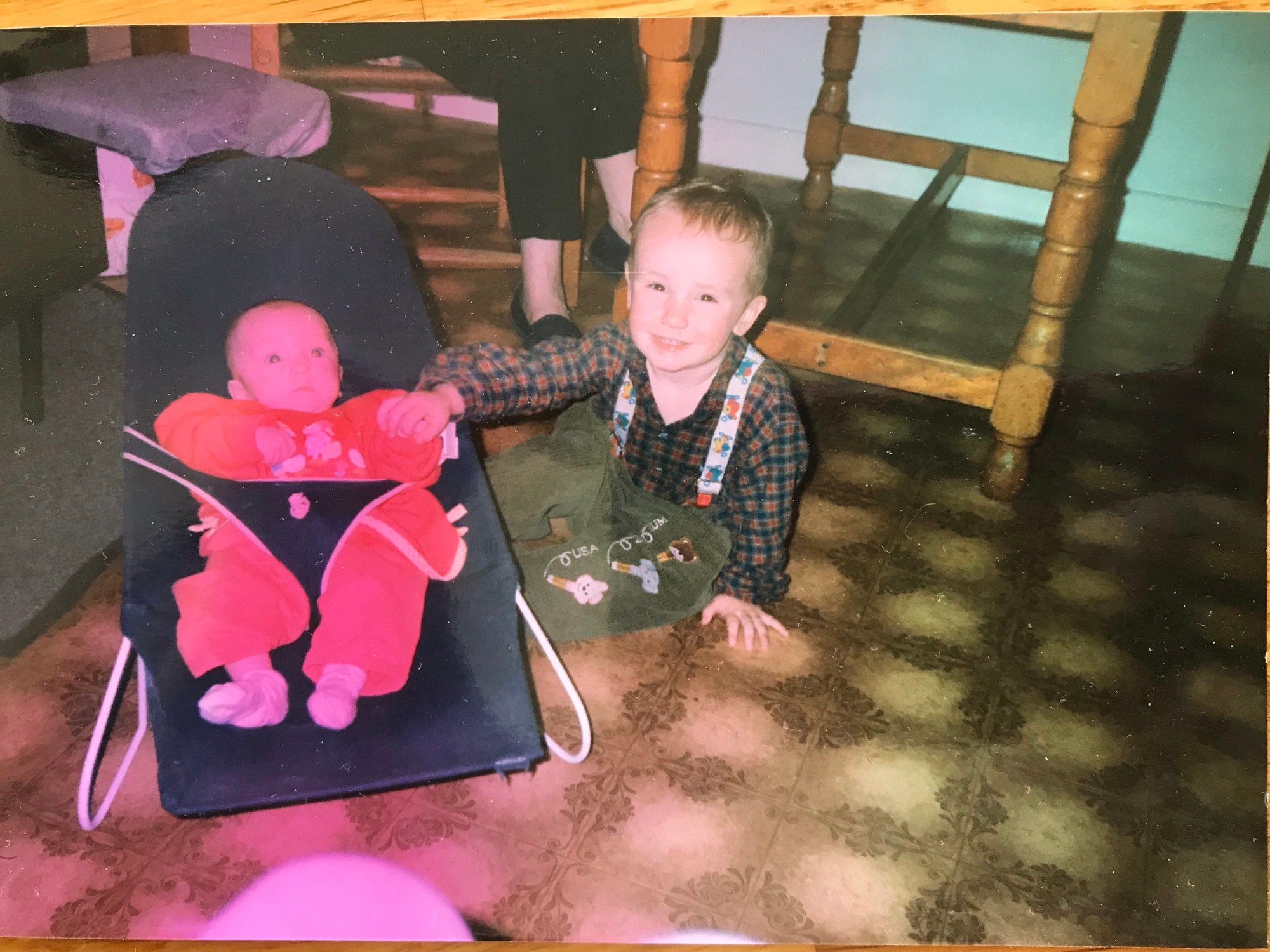
There is nothing ‘good’ about those four words being put together. Unless you “lost” your homework or you’ve finally escaped a toxic partner. But in my case, I lost my brother.
I stopped blogging right before this happened. And even writing about his death in a generalized way seems very wrong. But I use this platform to speak about overcoming fears, and one of my worst fears came true. There is no recipe filled with words of encouragement to ‘overcome’ it. If I want to keep writing about the ‘good kind of scary’, I have to talk about the very real ‘bad kind of scary’. The kind we may often choose to ignore because we can’t bear the thought of it happening to us.
Let’s acknowledge the words that have been repeated to me so many times I now hear them in my dreams:
sorry for your loss
Firstly, those four words cannot sum up my brother’s life or the loss of him in mine. They are meant for momentary comfort. But when they are printed on cards along our window sill, muttered with handshakes in a church and texted from long lost friends, the words begin to seem more like a ritual. One I’m never prepared for. So, I find myself saying things like ‘thanks’ and ‘I know’ and smiling, sometimes laughing — making other people uncomfortable when I’ve gone off script.
Irish funerals are sort of like unexpectedly waking up as a celebrity and being thrown into a meet and greet: you never have to worry about food or drink, there’s lots of hand shaking, some people crying hysterically and others telling you how great you are. You get a ton of handwritten cards. Except you’re surrounded with sad faces and pictures of your loved one who was alive days before but is now spoken about in the past tense.
When a death happens, you go from being alone with your family to being surrounded by people for days. The shopkeeper is hugging you and faces you haven’t seen in years are sitting on your couch. A neighbor is racing over with ham and an aunty is eating it. The doorbell’s ding becomes a familiar sound to wake up to. By the time the party ends, you learn the only person who can really latch onto the remainders of their life and process the pain is you.
If someone shoved me in a tattoo parlor three weeks ago, I probably would have inked the four words on my skin: sorry for your loss. But those words aren’t supposed to be permanent. They are words to survive a short period of time, which is what makes the next phase of reality a lot more difficult.
There are other four word sentences that can help in this phase: Life is a bitch. He was a gent. He was my favorite. I still miss him. He is my brother.
Being mindful in what we are saying and what we are doing is important, but with death it’s funny how words often fail us and a lot of the time, there are just no words at all. Nothing for you to say or to be said. People will ask: how are you? You might have no response. And I think that’s okay.
Societal routines, traditions, expectations and common phrases can be a big source of comfort or a source of frustration. Amidst this bad kind of scary, I am grateful to say I have had a community of people who have been a bundle of sunshine in these indescribably sad times. No matter what words were uttered, knowing that people care is what helps. Even the cliché ‘sorry for your loss’ will probably be blurred amidst the many others, but they are a comfort.
A friend recently sent me a care package which included a book that has been a godsend the past few weeks: It’s Ok That You’re Not Ok.
I recommend this book to anyone grieving the death of a loved one at any stage; whether it happened ten days ago or ten years ago. Megan Devine challenges the way society responds to death once the funeral is over — unintentionally rushing people out of their grief so they appear happy again and can be marked as ‘fixed’. But just because we are back in normal everyday situations, doesn’t mean we are feeling normal. And a person dying is not the same as recovering from a lost job. Although grief isn’t linear and everyone’s experience is unique, I found this book is like a warm reassuring hug during a time of feeling alone in your loss. Here are quotes:
“You didn’t need this. You don’t have to grow from it and you don’t have to put it behind you. Both responses are too narrow and shaming to be of use. Life-changing events do not slip quietly away, nor are they atonements for past wrongs. They change us. They are a part of our foundation as we live forward. What you build atop this loss might be growth. It might be a gesture toward more beauty, more love, more wholeness. But that is due to your choices. Not because your loved one’s death is your one-way ticket to becoming a better person.”
“We can’t understand how a perfectly healthy child can drop dead of what started as a simple cough. How someone biking to work, using a dedicated bike lane, wearing reflective clothing, can be struck and hit in an instant. They had to have done something terribly wrong. There has to be a reason. It’s terrifying to think that someone who seemingly did everything right could still die. It’s terrifying to look at a person torn a part by their grief, knowing that could be us someday. Losses like this highlight the tenuous nature of life. How easily, how quickly life can change.”
 A Good Kind of Scary